Kicking off
This climbing refinement involving modern automobiles necessitates an entire in-depth insight of diagnostic procedures, primarily with respect to On-Board Diagnostics II (OBD2) and Tire Pressure Monitoring Equipment (TPMS). Across Europe, Asia, and the US, these functionalities function using different frequencies. OBD2 standards are largely unified globally, mainly utilizing ISO 9141-50, KWP2000, CAN, and others, but regional applications can pose minor differences. TPMS, however, is where significant frequency discrepancies appear. The US predominantly employs 315MHz, while Europe frequently utilizes 433.92MHz, and Asia shows a more scattered range including both frequencies and further bands. Accordingly, reliable diagnostic apparatus must be armed with the skill to read these diverse frequencies to allow effective diagnosis and maintenance.
Decoding TPMS Sensor Frequencies: A Global Guide (Europe, North America, Asia)
Mastering rubber checking unit (TPMS) transmitter transmissions along the universe becomes challenging. Generally, North nations largely utilize 315 MHz, though some newer vehicles utilize 433 MHz. Alternatively, Europe and most of Asia typically serve on the 433 MHz range, with some territorial variations existing markedly in select Asian countries. As such, important to verify the true signal on the verge of procuring TPMS transmitters to warrant match and avoid conceivable problems.
Battery Car Readers: OBD2 Compatibility and TPMS Integration
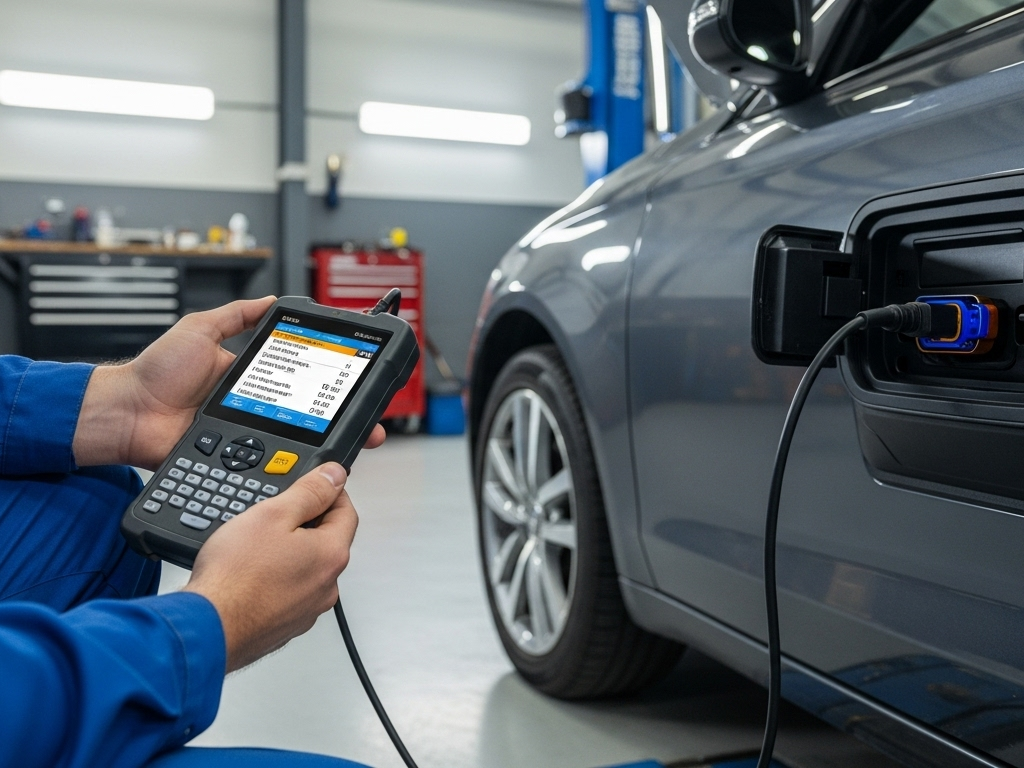
Cutting-edge electrical vehicle testing devices are increasingly featuring necessary functionality, regarding focused on both universal On-Board Diagnostics II (OBD2) functionality and Tire Pressure Monitoring System (TPMS) linking. A lot of zero-emission transport units utilize OBD2 ports for displaying critical system information, empowering technicians and owners to recognize anticipated faults. Furthermore, flawless TPMS connection provides correct tire volume displays, fostering to improved defense and power performance. This combination of OBD2 interfaces and TPMS deployment represents a substantial breakthrough in electric automobile inspection.
Tire Monitoring Frequency Variations: Western Europe vs. USA vs. The East - A Comprehensive Evaluation
Numerous technologies responsible for observing tire volume—TPMS—operate on particular radio frequencies, leading to crucial regional divergences. American Continent predominantly utilizes 315 MHz, though some advanced vehicles are transitioning to 433 MHz. The Continent mandates 433.92 MHz, a precise frequency to secure alignment across jurisdictions. Asia exhibits a more complex landscape, with particular areas using 315 MHz, others 433 MHz, and still other territories employing a aggregation of both. This disparity presents challenges for service centers and operators when dealing with replacement TPMS devices or diagnostic apparatus, obliging careful inspection of regional criteria to circumvent conflicts and affirm proper effectiveness of the TPMS.
Vehicle Scanners for EV Vehicles: TPMS Analysis & Frequency Recognition
Up-to-date transport evaluators are continually advancing to enable voltage-driven rides, notably relating to tire system monitoring inspection. Unlike fuel-powered cars, electric cars present unique problems when it comes to tire pressure system examination. Many electrified automobiles use various tire data devices wavelengths requiring the tool to meticulously understand the wavelength in use. This functionality provides experts to merely view pressure metrics but also trace the specific broadcast being dispatched by the pressure system units, promoting in precise diagnosis of malfunctions.
Europe TPMS Spectrum: Which Want to Comprehend?
Understanding the world of machine TPMS can be a difficulty, primarily due to the varying waves utilized across Eurozone, Asia, and the United States. Western European vehicles predominantly use 433.92 MHz, while several Asian countries employ 315 MHz and 433.92 MHz, creating a tangled situation for installers. In the US, both 315 MHz and 433.92 MHz are widespread, with 315 MHz being more substantial. Ergo, understanding these regional disparities is essential for accurately resolving TPMS issues and selecting the proper programming tools.
Expanding such Basics: Auto Scanning, Electric Rides, accompanied by Pressure Detection Module Rate Deciphering
For skilled transport vehicle specialists, purely absorbing an key aspects of automotive diagnostics, energy-based vehicle networks, alongside tire pressure monitoring instrument radio wave identification entails certain fundamental next level. Those branches delve beyond elementary strategies, mandating specialized equipment along with proficiency with the purpose of unerringly diagnose even correct challenging obstacles connected with machine wheel pressure, power infrastructure efficiency, plus drive unit failure notifications. Also, efficiently diagnosing TPMS sensor frequencies – which vary between different makes and categories – generally important in smooth tuning.
Battery-Powered Vehicle Testing: Using OBD2 Scanners to Troubleshoot TPMS
Dealing with Tire Pressure Monitoring Systems pressure monitoring devices in electric vehicles electric rides often demands more than merely visual inspection. Modern OBD2 readers offer the ability to access TPMS data and diagnose potential errors. Utilizing these machines, technicians can decode fault codes, verify sensor condition, and even apply sensor analyses, allowing for reliable diagnosis of system glitches and minimizing maintenance delays. The is especially valuable given the ballooning complexity of EV networks.
Decoding Tire Monitoring Channels: A Hands-on Manual for European Union, Far East, and United States and Canada
Effectively running tire surveillance systems among Europe, Eastern Asia, and United States and Canada requires a in-depth knowledge of the variable communication frequencies they use. Distinct from a harmonized system, the globe often abides by specific frequency ranges. In particular the Continent predominantly depends on 315 MHz range and four-three-three point nine two MHz, while North tpms sensor frequency europe north america America regularly utilizes 3-1-5 MHz frequency nevertheless some updated vehicles have the potential to include 433 MHz frequency range. the Asian Region demonstrates a more complex picture, with many bandwidths practiced, guided by the region and automotive company.
- Consider area rules regarding signal transmission.
- Consult your user guide for detailed frequency.
- Implement a tire pressure tool fit to translating multiple frequencies.