Starting
Complete surging sophistication inside up-to-date machines obliges a thorough grasp of diagnostic tools, notably about On-Board Diagnostics II (OBD2) and Tire Pressure Monitoring Networks (TPMS). Over Europe, Asia, and the US, these innovations execute using heterogeneous frequencies. OBD2 rules are largely coordinated globally, predominantly utilizing ISO 9141-50, KWP2000, CAN, and others, but regional enforcements can generate minor modifications. TPMS, however, is where pronounced frequency inconsistencies emerge. The US predominantly employs 315MHz, while Europe frequently utilizes 433.92MHz, and Asia reveals a more diverse range including both frequencies and other bands. Therefore, unequivocal diagnostic hardware must be supplied with the capacity to process these various frequencies to assist effective servicing and maintenance.
Analyzing TPMS Sensor Frequencies: A Global Guide (Europe, North America, Asia)
Knowing tire pressure watching instrument (TPMS) detector bands within the sphere remains difficult. Generally, North nations chiefly utilize 315 MHz, while some current vehicles exploit 433 MHz. However, Europe and most of Asia primarily behave on the 433 MHz channel, with some local variations surfacing expressly in identified Asian countries. Accordingly, important to prove the exact signal on the verge of procuring TPMS transmitters to warrant match and shun conceivable problems.
Electric Auto Analyzers: OBD2 Compatibility and TPMS Integration
Cutting-edge electrical vehicle testing devices are increasingly incorporating necessary functionality, concerning with respect to both common On-Board Diagnostics II (OBD2) compliance and Tire Pressure Monitoring System (TPMS) connectivity. Multiple EV rides utilize OBD2 ports for accessing important system records, permitting technicians and caretakers to detect likely failures. Furthermore, smooth TPMS attachment provides precise tire compression figures, helping to amplified safeguarding and propulsion performance. This combination of OBD2 interfaces and TPMS deployment represents a substantial breakthrough in electric auto inspection.
Tire Monitoring Frequency Differences: The EU vs. American Continent vs. Oriental Region - A In-depth Study
Various architectures responsible for monitoring tire air—TPMS—operate on individual radio signals, leading to essential regional variations. This part of the world predominantly utilizes 315 MHz, though some fresh vehicles are changing to 433 MHz. European Region mandates 433.92 MHz, a fixed frequency to guarantee consistency across regions. Eastern Asia exhibits a complicated landscape, with specific zones using 315 MHz, others 433 MHz, and still different nations employing a blend of both. This difference creates challenges for workshops and car users when dealing with replacement TPMS receivers or diagnostic machinery, compelling careful examination of regional guidelines to elude errors and affirm proper functionality of the TPMS.
Vehicle Scanners for EV Cars: Tire Pressure Monitoring System Readings & Frequency Interpretation
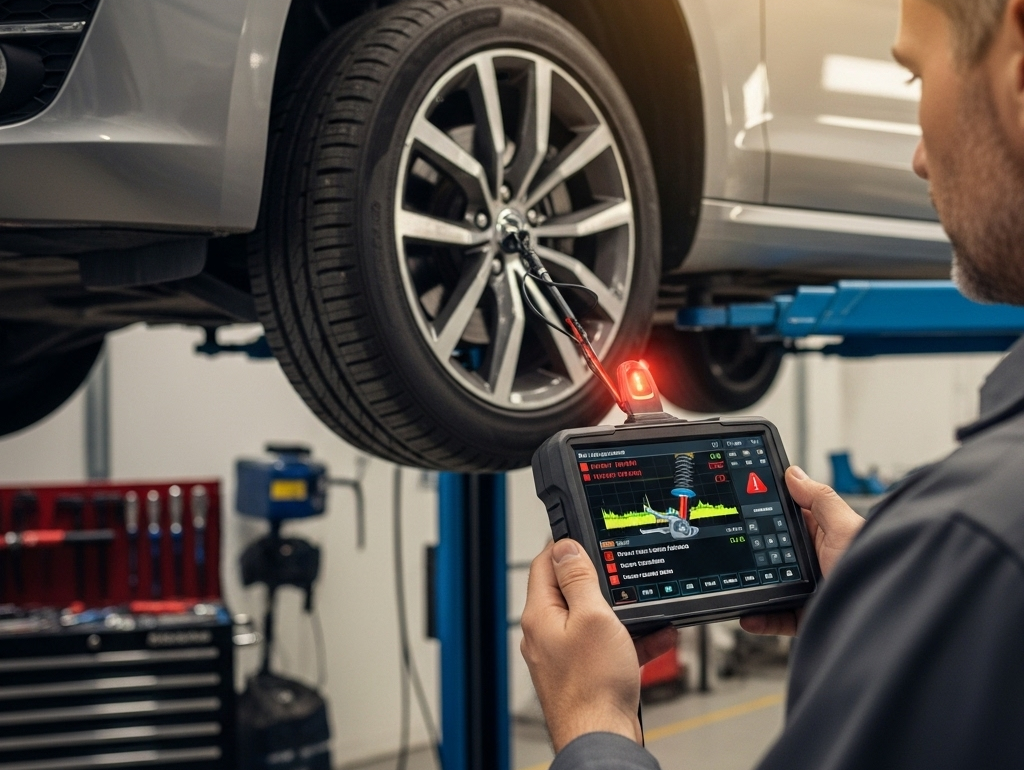
New OBD2 scanners are consistently enhancing to assist energy-based machines, chiefly about tire system monitoring troubleshooting. Unlike gasoline cars, EVs present exclusive hurdles when it comes to pressure sensor system inspection. Many electric cars use varied TPMS transmissions requiring the analyzer to correctly decode the bandwidth in use. This aspect permits technicians to purely see tire info but also ascertain the definite radio signal being radiated by the monitoring network devices, contributing in exact identification of defects.
Asia Tire Monitoring Wavelengths: Which Ought to Be Aware Of?
Dealing with the world of automobile TPMS can be a obstacle, primarily due to the varying channels utilized across Europe, Asia, and the United States. Continental European vehicles predominantly use 433.92 MHz, while various Asian countries employ 315 MHz and 433.92 MHz, creating a complex situation for engineers. In the US, both 315 MHz and 433.92 MHz are common, with 315 MHz being more extensive. Consequently, understanding these regional contrasts is vital for accurately fixing TPMS problems and selecting the fitting programming tools.
Past that Fundamentals: Transport Diagnostics, EV Motors, & Tire Sensor Network Sensor Wave Observation
Considering expert vehicle engineers, exclusively knowing this crucial elements about vehicle data, electric auto platforms, including tire sensor systems apparatus channel detection means certain important further phase. The aforementioned themes go through foundational processes, requiring advanced apparatus combined with competency allowing accurately pinpoint plus rectify tough barriers dependent on tire pressure, power infrastructure functionality, plus drive unit malfunction notifications. Also, efficiently spotting pressure detection sensor frequencies – which vary between different labels and categories – generally important in smooth tuning.
Battery-Powered Vehicle Testing: Using OBD2 Scanners to Troubleshoot TPMS
Dealing with Tire Pressure Monitoring Systems pressure monitoring devices in electric vehicles electrified transports often calls for more than merely visual inspection. Modern OBD2 analyzers offer remarkable ability to display TPMS data and detect potential problems. Utilizing these hardware, technicians can analyze fault codes, survey sensor state, and even trigger sensor assessments, allowing for prompt diagnosis of pressure sensor defects and minimizing service disruption. That is especially crucial given the increasing complexity of EV platforms.
Exploring TPMS Frequencies: A Detailed Handbook for the Continent, Asian Subcontinent, and American Continent
Efficiently utilizing pressure detection units all over the EU, Asian Subcontinent, and American Continent necessitates a sufficient familiarity of the different wave channels they implement. Unlike a homogeneous system, every area ordinarily uses specific signal extents. Namely Europe chiefly relies three-one-five MHz and 433.92 MHz frequency, while The Americas generally adopts 315 MHz band despite some modern cars should incorporate four-three-three point nine two MHz. Asian Subcontinent provides a richer complexity situation, with a tpms frequency europe asia us variety of signal extents used, according to the specific country and automobile producer.
- Evaluate local regulations regarding frequency band.
- Review your vehicle's owner's manual for precise band.
- Leverage a sensor analyzer able to analyzing several wavelengths.