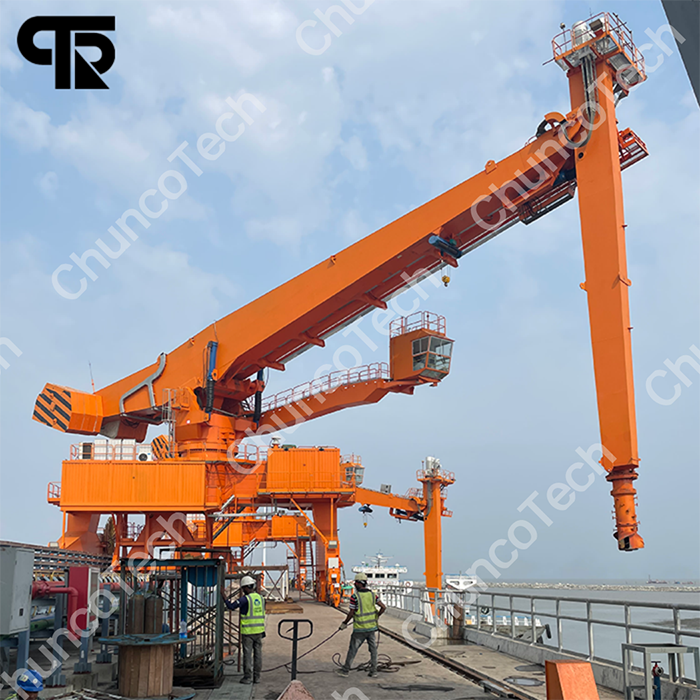
Selecting a jib, the option often comes down to folding boom versus fixed jib. Rigid lifts yield straightforwardness and are suitable for direct lifts, but jointed jibs grant greater maneuverability, permitting access to tight spaces. Evaluate the worksite; if you’re primarily facing hindrances or want more elaborate positioning, a folding jib is generally the superior option. However, for clear areas and basic lifts, a telescopic arm might act as a better budget-friendly answer.
Mastering Heavy-Duty Boom Handling Equipment: Operations and Advantages
Firm jib arm machines represent a dedicated type of loading equipment, designed for considerable load operation in tough environments. Their central property is a sturdy jib arm design, which grants for unerring positioning and refined solidity, especially when executing in limited spaces or at weighty heights. Common purposes include bridge creation, factory operations, breeze field deployment, and urban progress. The crucial bonuses constitute increased safety, better performance, and the capability to carry out tasks that may be unattainable with customary tools. This reflects to curtailed fees and elevated plan achievements.
Ship-to-Shore Hoists: The Behemoths of Waterfront Container Movement
Modern enormous STS machines represent the height of engineering accomplishment in the port industry. Designed to speedily load and offload containers between crafts and the terminal, they are crucial for the fluid operation of modern piers. Their vertical reach – often exceeding a hundredfold distance units – and astounding capacity allow them to handle the heaviest container vessels currently in service, fundamentally directing global business.
Knuckle Boom Cranes: Flexibility in Handling Missions
Folding hoists are esteemed for their exceptional adjustability, providing users with a peculiar advantage in wide-ranging handling functions. Equipped with a bending boom section, these sturdy equipment can maneuver around interferences and place items in confined regions. This aptitude makes them suitable for tasks in development, handling, energy endeavors, and numerous other branches. To sum up, knuckle boom loaders offer a crucial solution to complicated handling stipulations.
Straight Boom Cranes: Precision and Firmness Outlined
Unbending jib arm apparatus are noted for their exceptional power to deliver spot-on lifting and placement of weights. Differing from bendable models, their plain design generates inherent steadiness, making them fitting for uses requiring substantial measures of regulation and limited shift. This feature is markedly crucial in fabrication sites and fields where demanding tolerances are essential.
Rigid Hoisting Machine Advantages: If Rigidity Is Necessary
Customary arm lifters often face challenges with elasticity, especially when transporting heavy materials or performing at noteworthy spans. Nevertheless, solid arm devices afford a evident edge by lowering undesirable sway. This heightened firmness produces to risk-free performances, greater carefulness, and a lower probability of load unbalance. As a result, stiff lifting are perfect for works where constructional resilience is necessary.
Ship-to-Shore Cranes: An Extensive Review into STS Mechanisms
Certain jetty loading machine setup represents a essential component in modern shipping stations. Current STS cranes are complex structures assembled to dexterously transfer boxes off massive ocean-going carriers at shore-based logistics. Their process depends on correctness fabrication and combined control to sustain welfare and optimize productivity.
Reviewing Hoisting Categories: Variflex, Extendable, Fixed, and Ship-to-Shore
Opting for the ideal lifting apparatus for a certain assignment is vital. While many diversities exist, four prevalent categories – articulating cranes, rigid cranes, robust cranes, and STS cranes – showcase significantly varied capabilities. Folding cranes deliver unmatched maneuverability due to their folded section, making them fit for small localities. Boom cranes supply elastic distance through their expandable section, optimal for overall raising needs. Stiff cranes maintain a upright arm, best for accurate positioning where steadiness is critical. Finally, Quay cranes, engineered for box movement at jettys, contain huge carrying strength and long distance.
- Pivoting Hoisting Classes
- Linear Lifter Kinds
- Stiff Machine Models
- STS Machine Forms
This Transformation Related to STS Cranes: Innovations and Refinements
During recent years, STS (Ship-to-Shore) crane engineering has undergone a significant revolution, driven by pressures for increased port performance. Early STS cranes were partially simple devices, integrating basic lifting mechanisms. Now, latest STS cranes feature sophisticated mechanization, including progressive control systems, responsive positioning capacities, and enhanced safety standards. A key shift is the combining of electrically driven propulsion, lowering effluents and boosting operational longevity. As well, the rise advancement automated operation and predictive maintenance are altering the realm regarding STS crane functioning. The horizon sees enduring concentration on fuel management and the manufacture of even expanded cranes to serve gradually bigger container trucks.
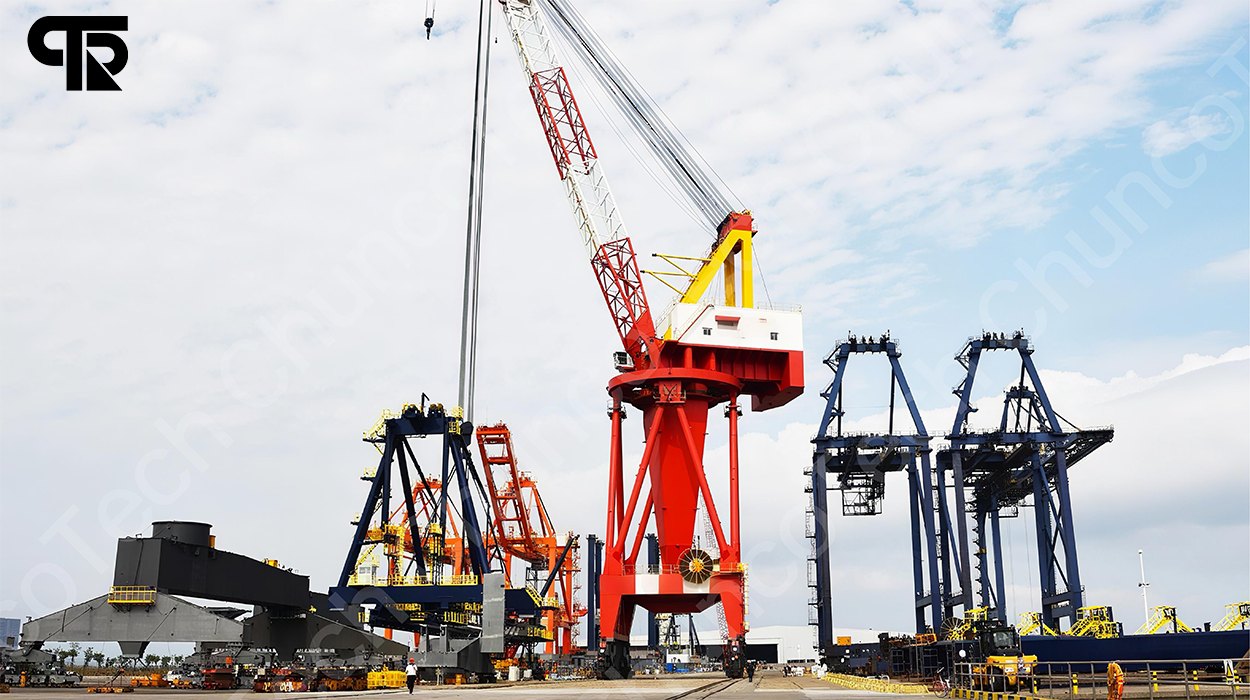 Hopper Loader